12 SEPTEMBER, 2026
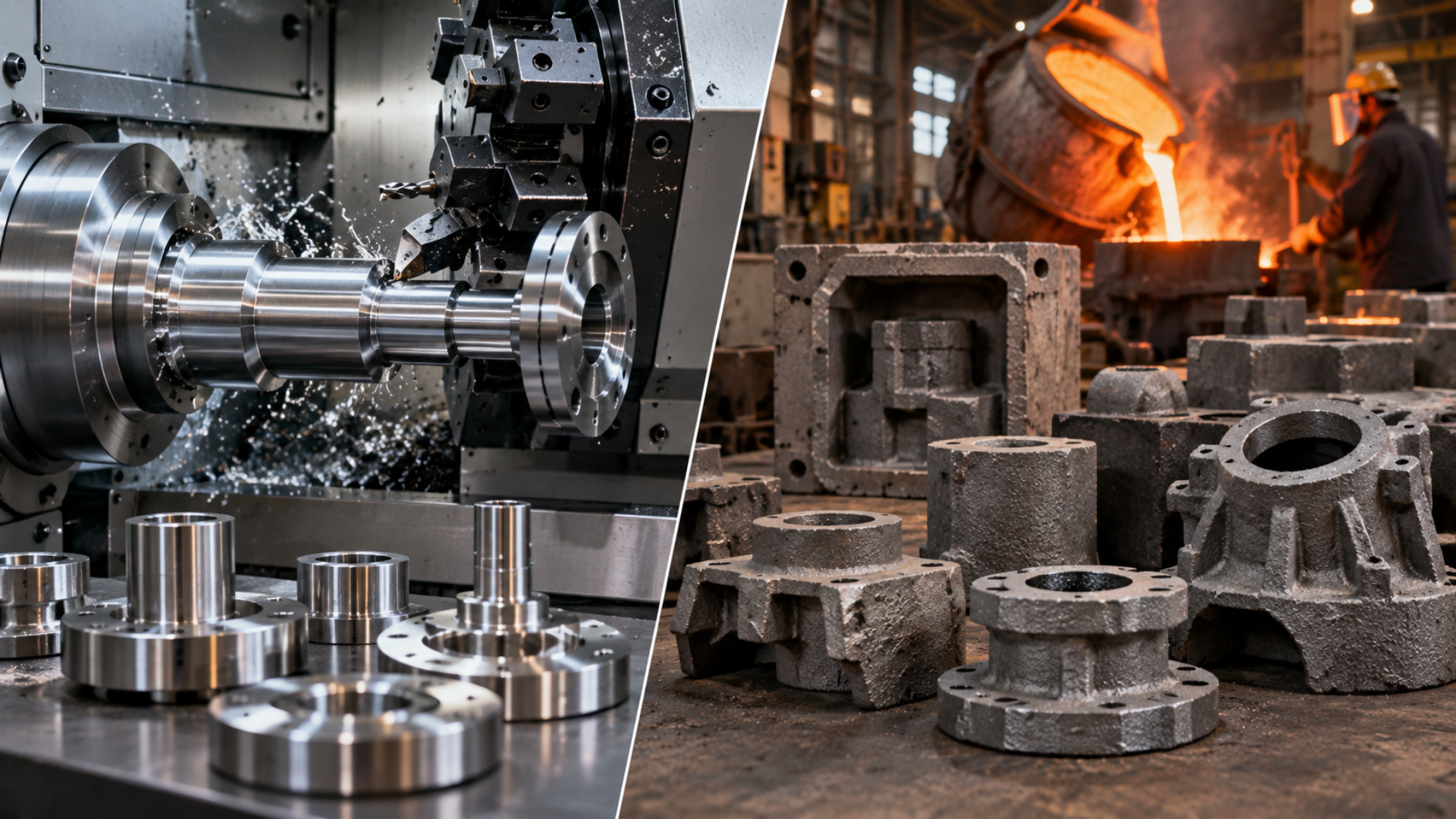
Choosing the right manufacturing process is an important decision when developing precision engineering components. Two widely used methods are casting and precision machining, and each process offers different advantages depending on the component design, material, quantity and required dimensional accuracy.
Understanding the difference between these processes helps manufacturers select the most suitable and cost-effective solution for their application.
What Is Casting?
Casting is a manufacturing process in which molten metal is poured into a mould and allowed to solidify into the required shape.
It is particularly suitable for components with complex geometries, larger sections and intricate shapes that may be difficult or expensive to produce entirely through machining.
Key Advantages of Casting
- Suitable for complex component geometries
- Supports a wide range of materials
- Suitable for different component sizes
- Efficient for higher production volumes
- Reduces the amount of material that needs to be machined
What Is Precision Machining?
Precision machining uses advanced CNC equipment to remove material from a workpiece and achieve the required dimensions, tolerances and surface finish.
Processes such as CNC Turning, VMC Machining and precision milling are commonly used to manufacture shafts, flanges, bushings, housings and other engineering components.
Key Advantages of Precision Machining
- High dimensional accuracy
- Excellent repeatability
- Controlled surface finish
- Suitable for tight-tolerance components
- Ideal for shafts, bushings, flanges and complex machined parts