
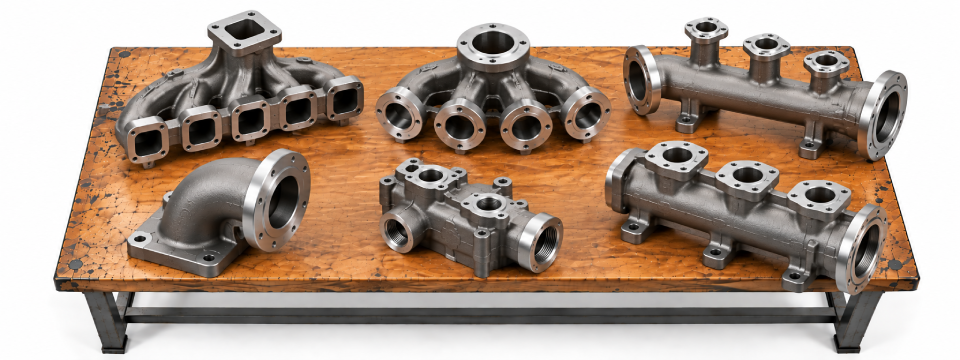
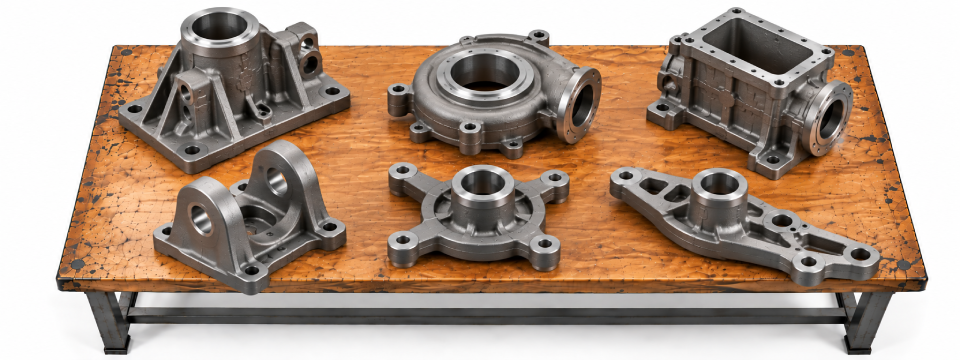
01 — PATTERN & MOULD PREPARATION
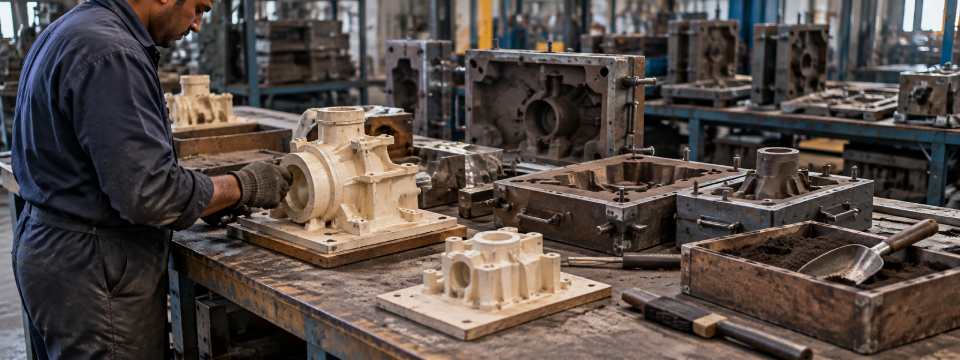
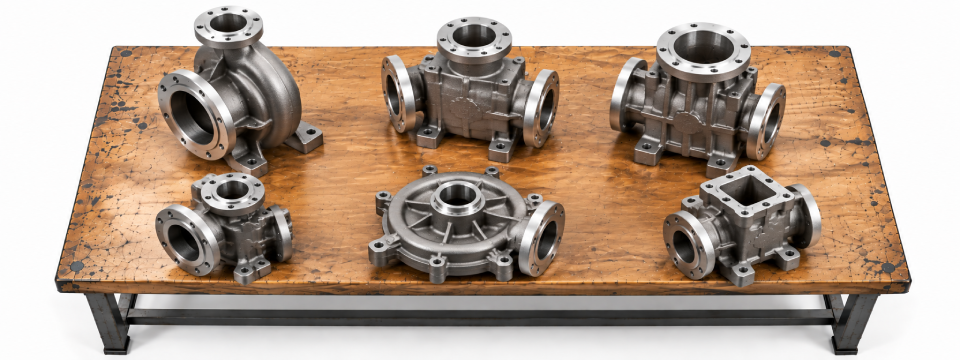
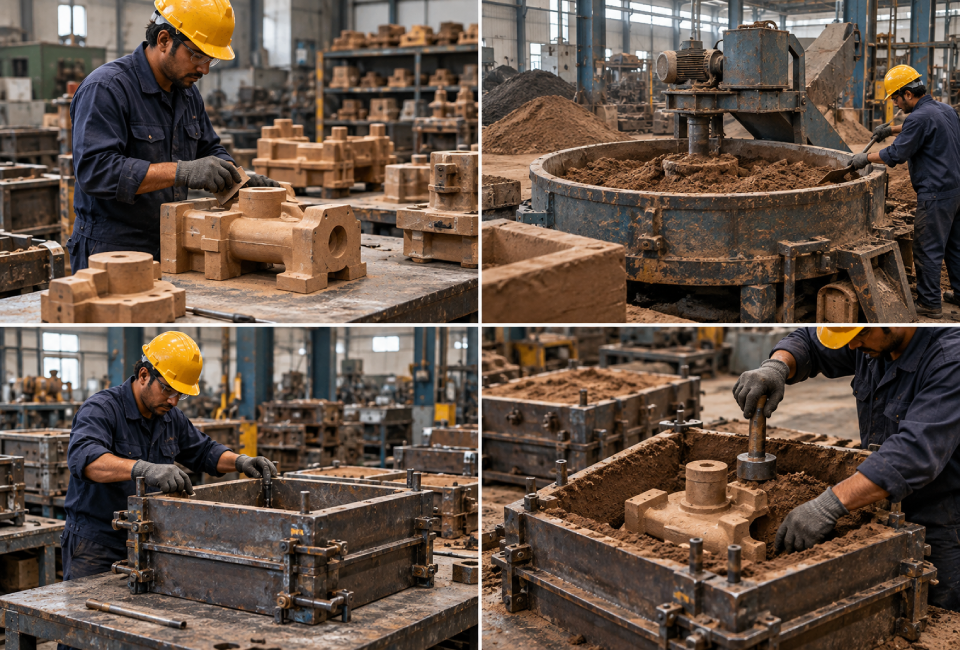
Creating the mould foundation for the required iron component.Iron casting begins with preparing an accurate pattern according to the required component geometry. The pattern defines the external shape and dimensions that need to be reproduced in the mould.
Prepared moulding sand is compacted around the pattern inside the mould box to create the required cavity. Proper sand preparation and mould formation help maintain the required geometry throughout the casting process.
Process Steps :-
- Pattern Preparation
- Sand Preparation
- Mould Box Preparation
- Mould Cavity Formation
02 — CORE MAKING & MOULD ASSEMBLY
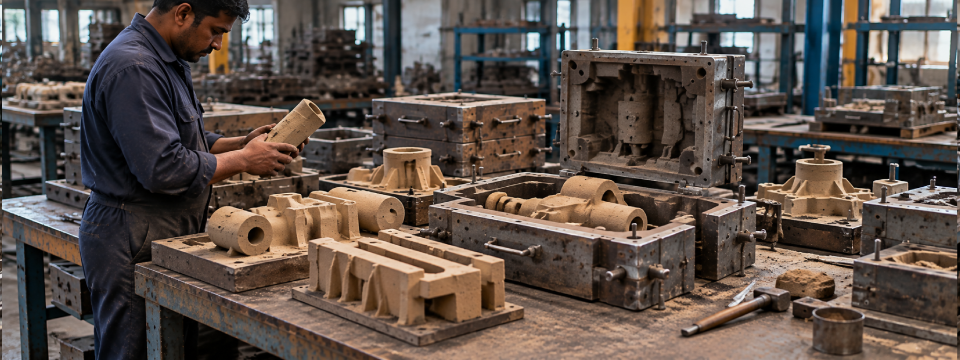
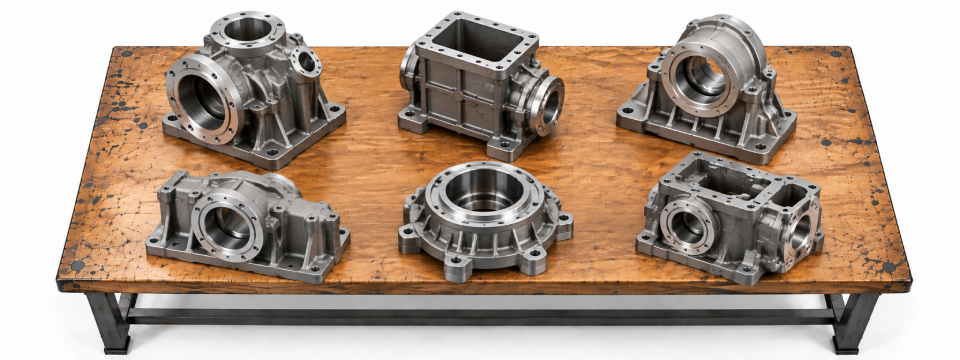
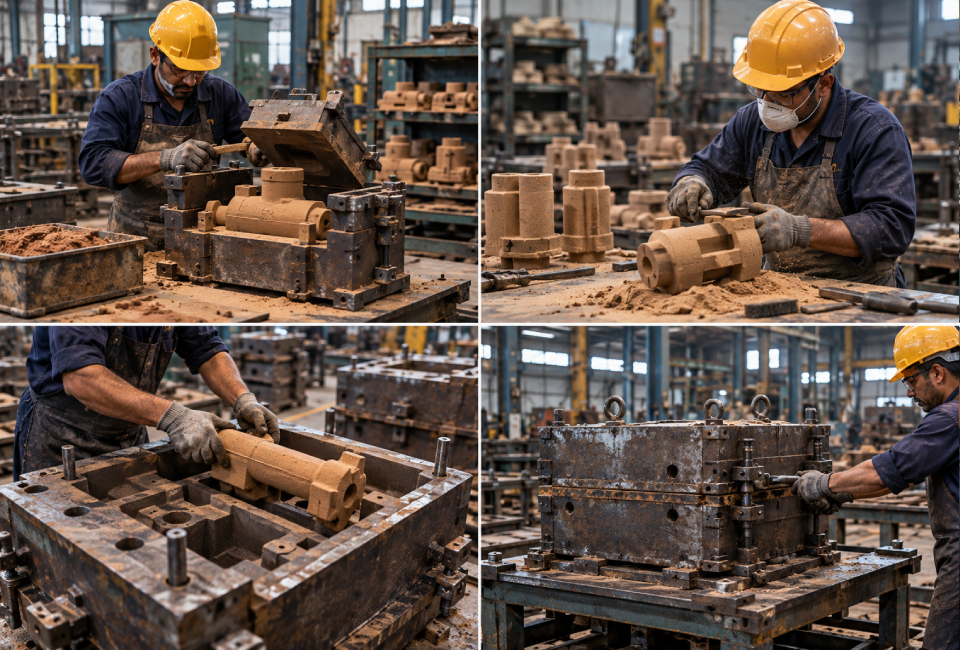
Creating internal features and preparing the complete mould.Where the component requires internal holes, passages or cavities, sand cores are prepared according to the required geometry. The cores are finished and positioned accurately to create the internal features of the final casting.
The mould sections are then aligned and assembled carefully, ensuring the pattern cavity and core positions are maintained correctly before molten iron is introduced into the mould.
Process Steps :-
- Core Making
- Core Finishing
- Core Placement
- Mould Assembly
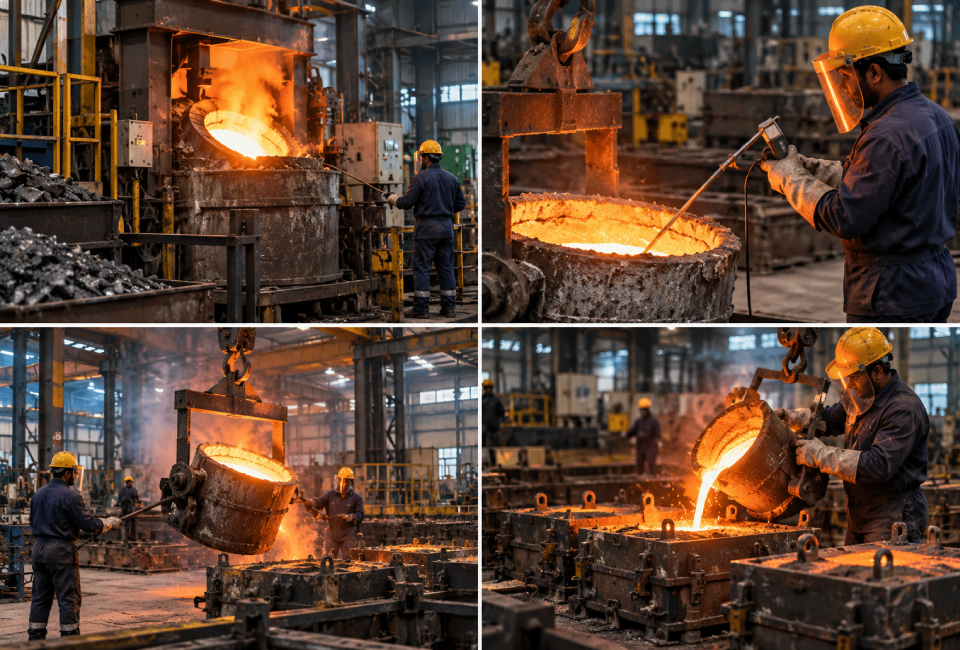
03 — IRON MELTING & POURING
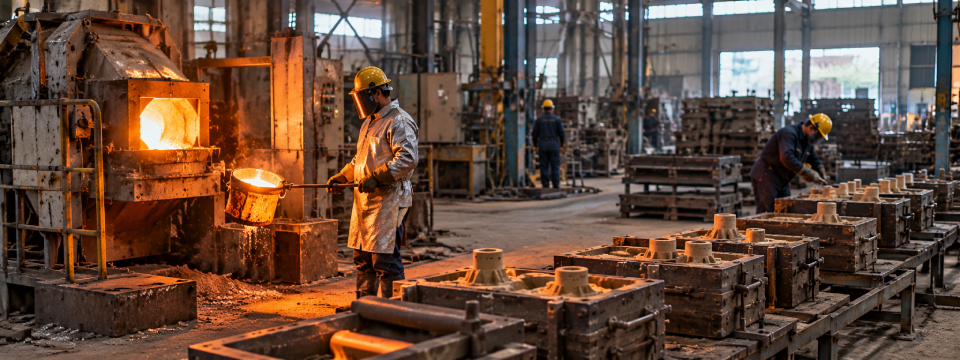
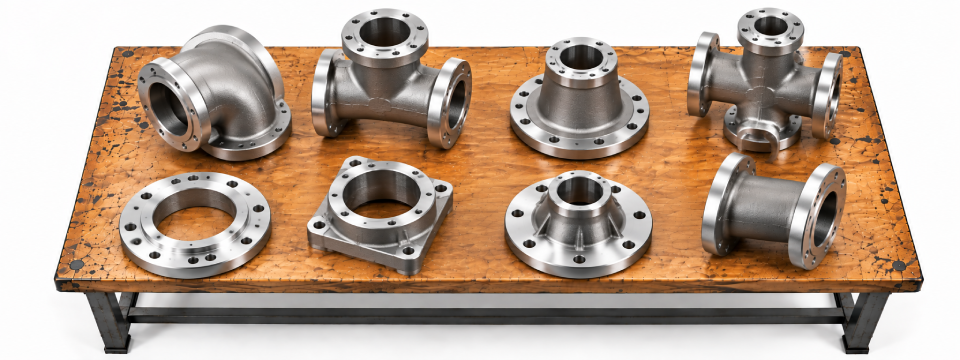
Filling the prepared mould with molten iron under controlled conditions.The selected iron material is melted in a suitable furnace and brought to the required pouring condition. Temperature and handling are controlled to prepare the molten metal for consistent mould filling.
The molten iron is then transferred and poured into the assembled mould through the designed gating system. The metal fills the cavity and begins to solidify, forming the required component geometry.
Process Steps :-
- Iron Melting
- Temperature Control
- Molten Metal Transfer
- Mould Filling
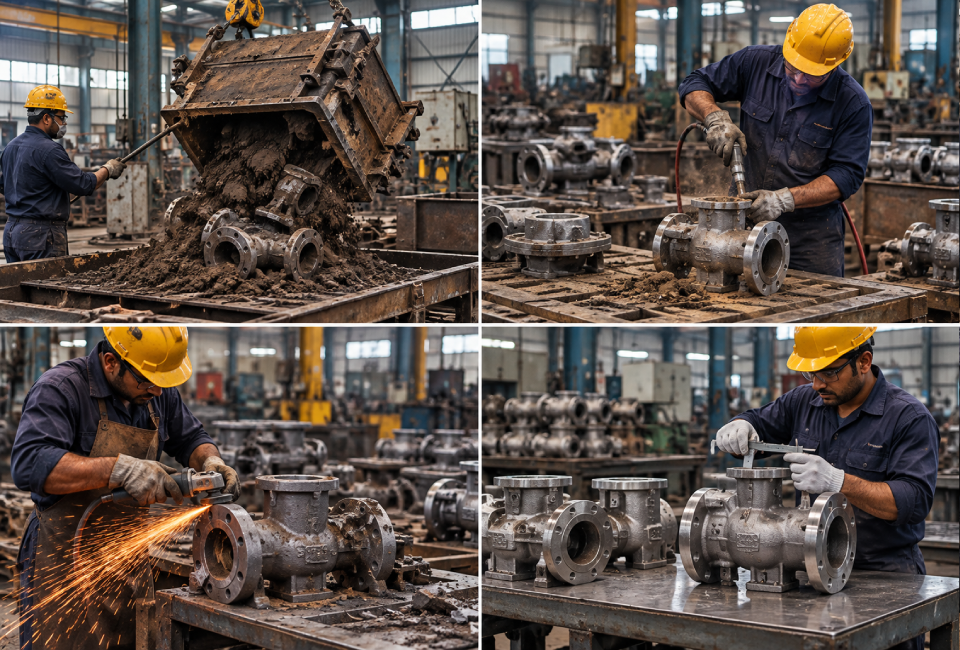
04 — SHAKEOUT & FINISHING
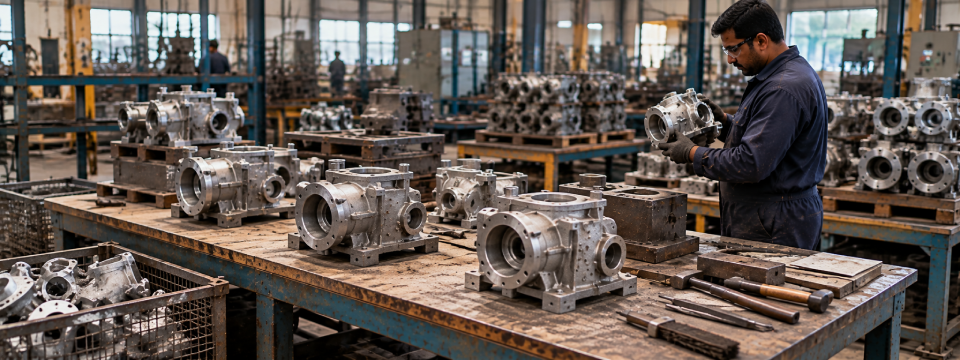
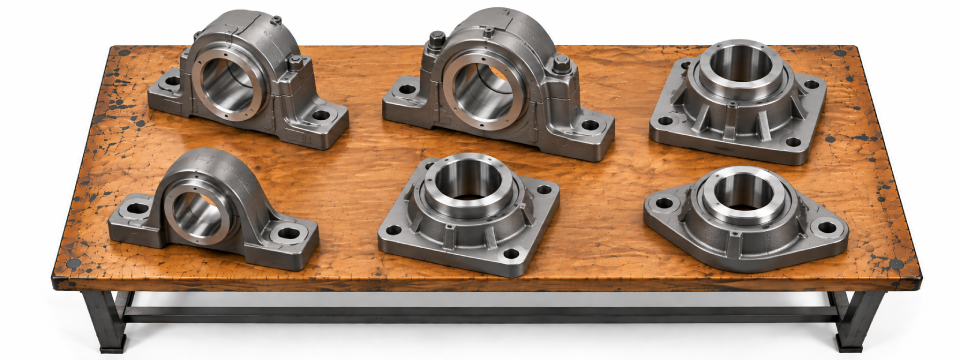
Removing, cleaning and inspecting the finished iron casting.After the molten iron has solidified and cooled, the sand mould is broken during the shakeout operation to release the cast component. Sand and core material are removed to expose the complete casting and its internal features.
The casting then undergoes fettling and removal of gates, risers and other excess material. The component is cleaned and inspected before moving to machining or subsequent production stages.
Process Steps :-
- Mould Shakeout
- Sand & Core Removal
- Fettling & Gate Removal
- Casting Inspection