
01 — MATERIAL PREPARATION & HEATING
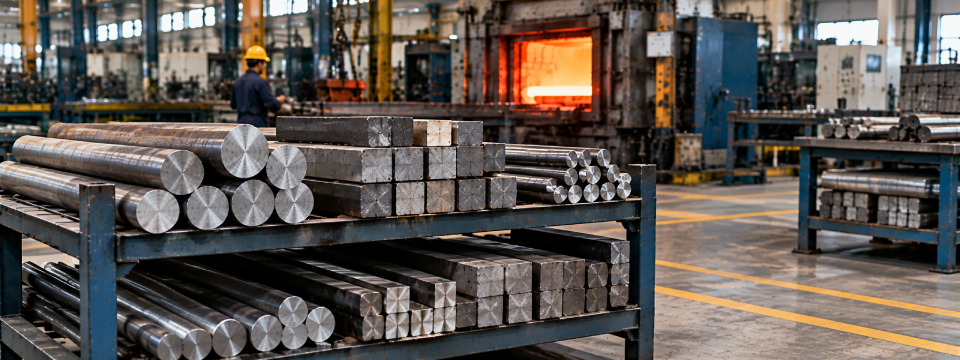
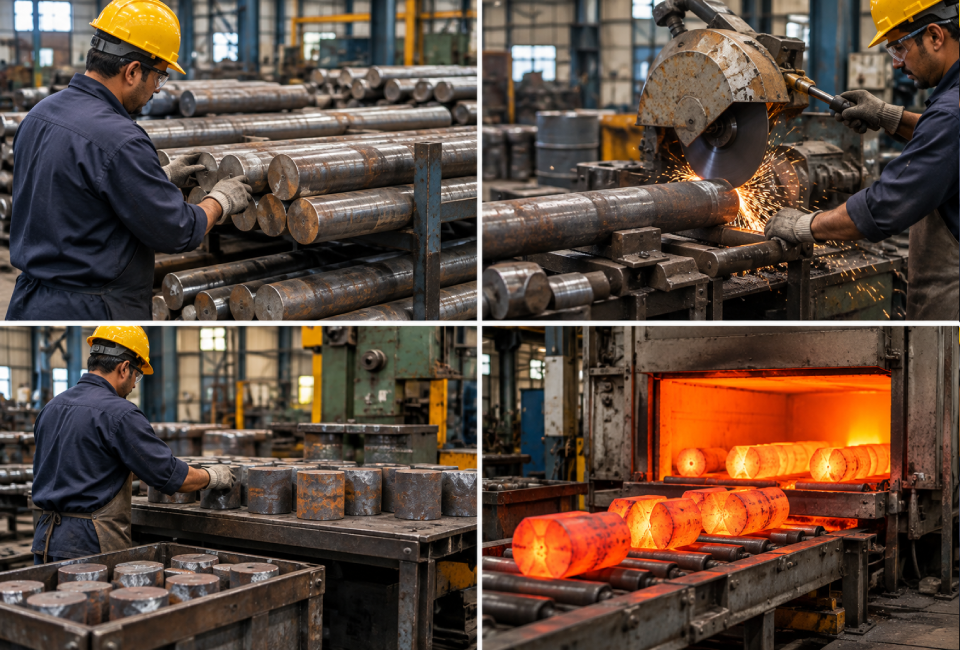
Preparing the metal for controlled forming.The process begins with selecting and preparing the required metal stock according to the component specification. The material is cut into suitable blanks to provide the required quantity of material for the forming operation.
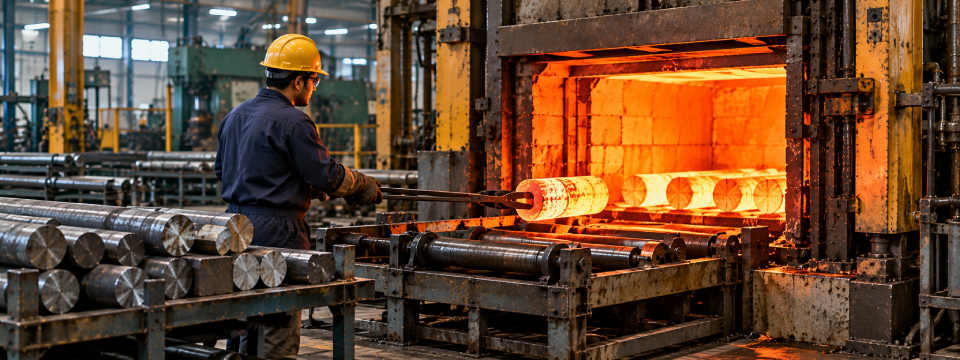
The prepared blank is then heated to the required forging temperature. Controlled heating brings the material into a suitable condition for forming while maintaining consistency throughout the production cycle.
Process Steps :-
- Material Selection
- Stock Cutting
- Blank Preparation
- Controlled Heating
02 — FORGING & SHAPE FORMATION
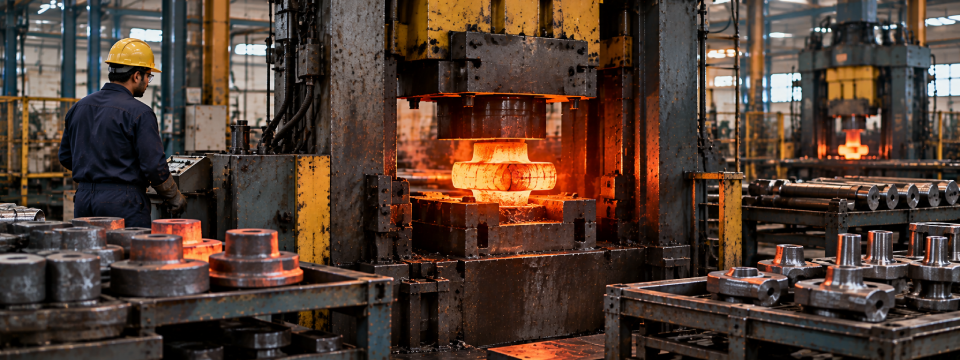
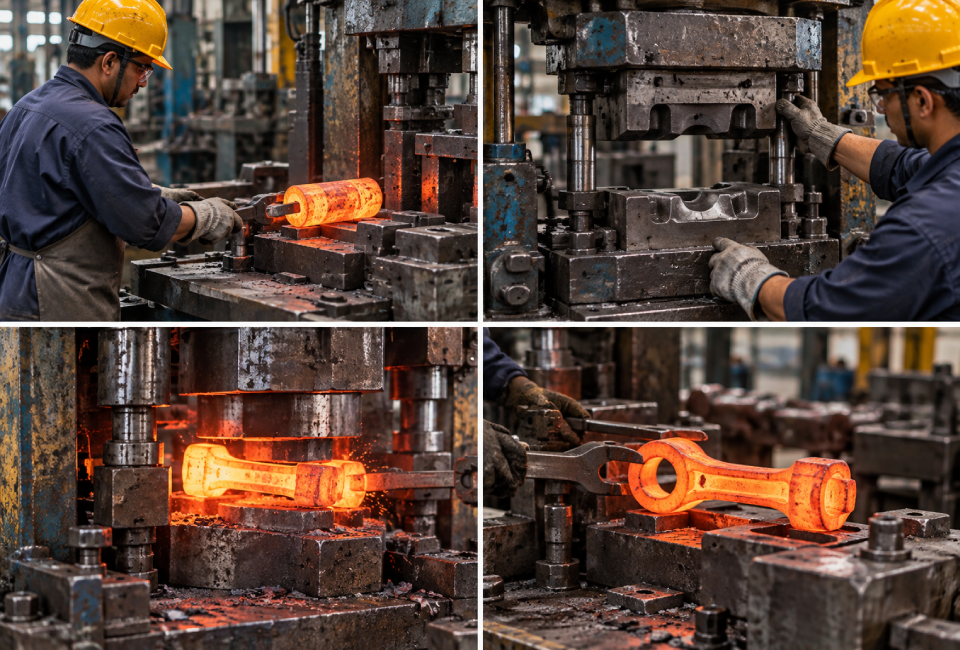
Transforming the heated blank into the required component form.The heated metal blank is positioned in the forging setup and subjected to controlled compressive force. The material progressively takes the required shape through the selected forging operation.
Forming parameters are controlled according to the component geometry and production requirements. This stage establishes the primary shape and structural form of the forged component.
Process Steps :-
- Blank Positioning
- Die Setup
- Controlled Forming
- Shape Development
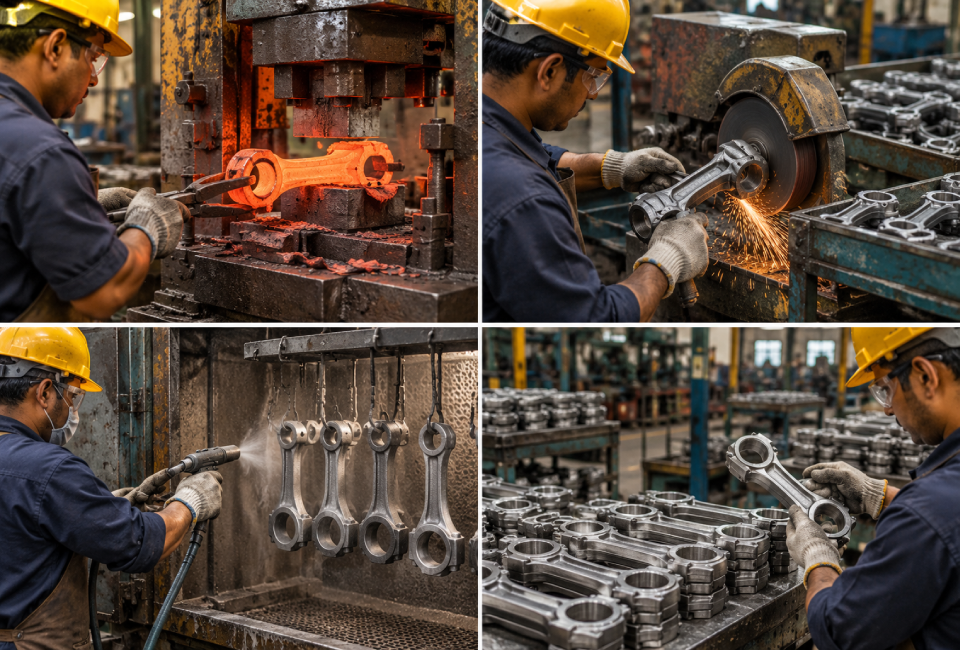
03 — TRIMMING & CONDITIONING
Removing excess material and preparing the forged component for further operations.After forming, excess material such as flash is removed from the forged component to achieve a cleaner and more defined profile. The component is then prepared for subsequent processing according to its required geometry.
Where required, additional conditioning operations can be carried out to prepare the forged part for machining. These operations help establish a suitable starting condition for achieving the final component dimensions.
Process Steps :-
- Flash Removal
- Edge Trimming
- Surface Conditioning
- Component Preparation
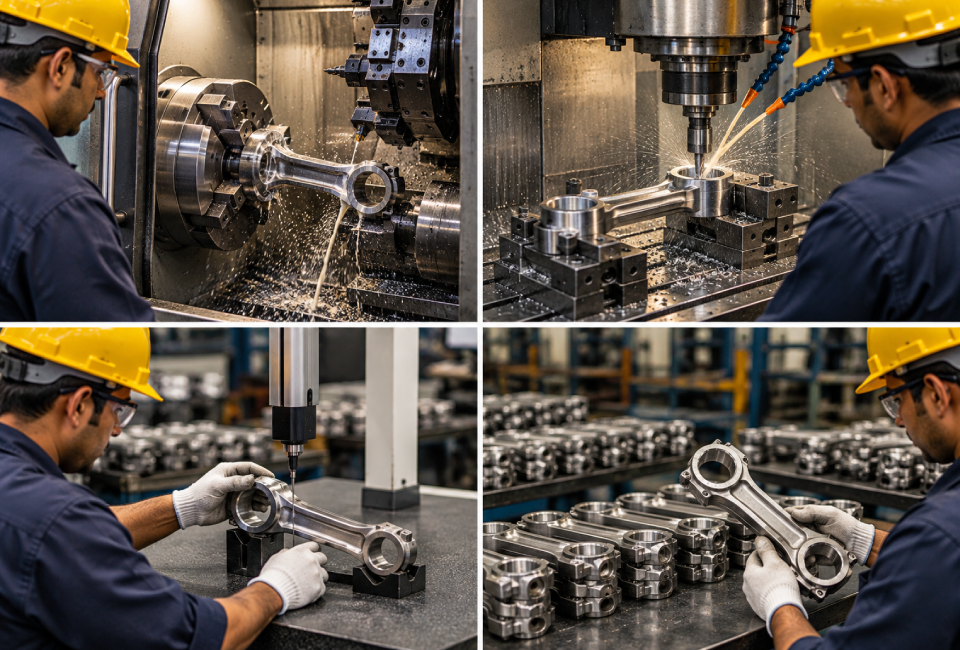
04 — MACHINING & FINAL VERIFICATION
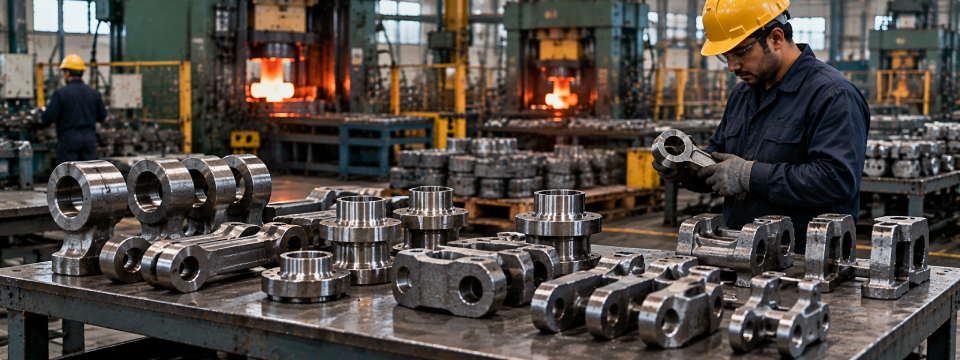
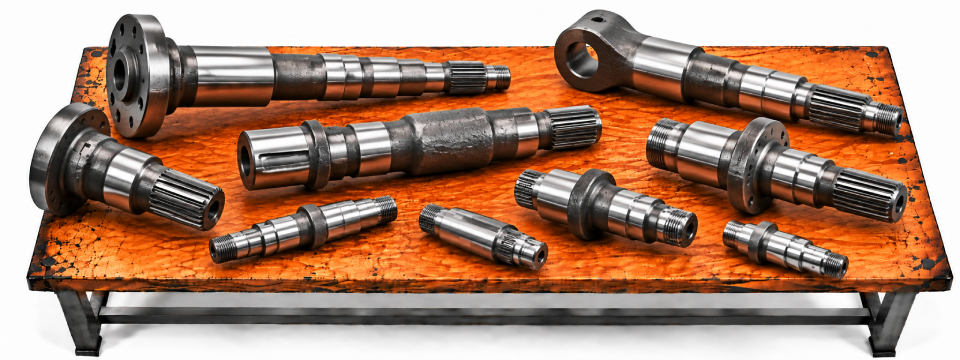
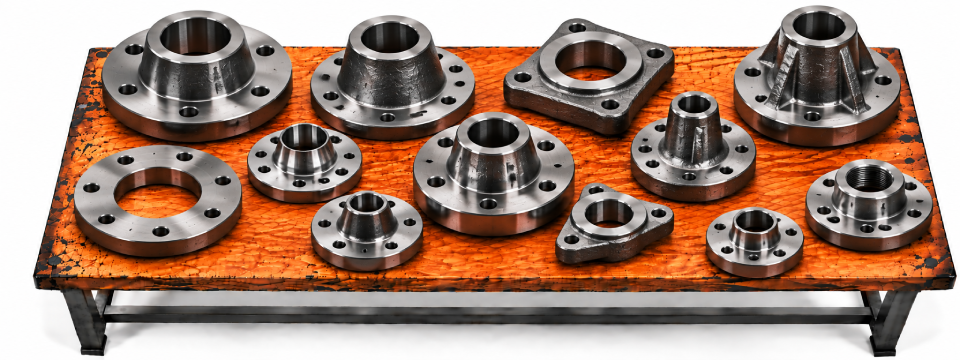
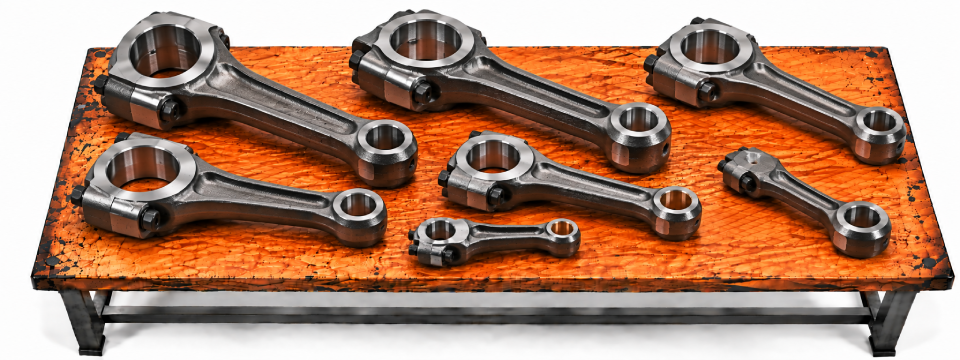
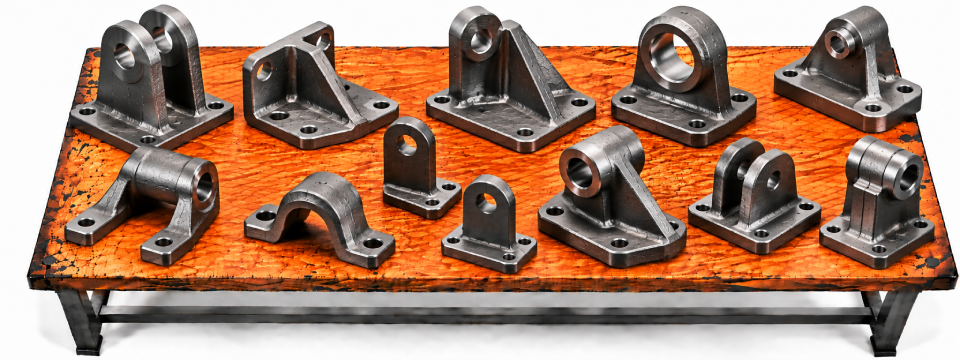
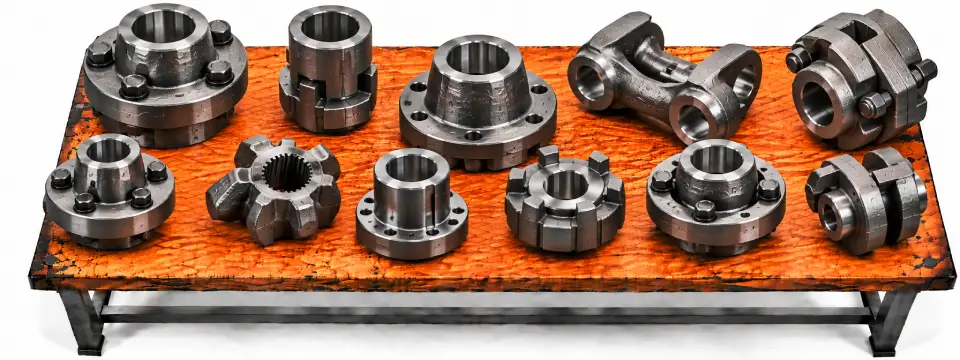
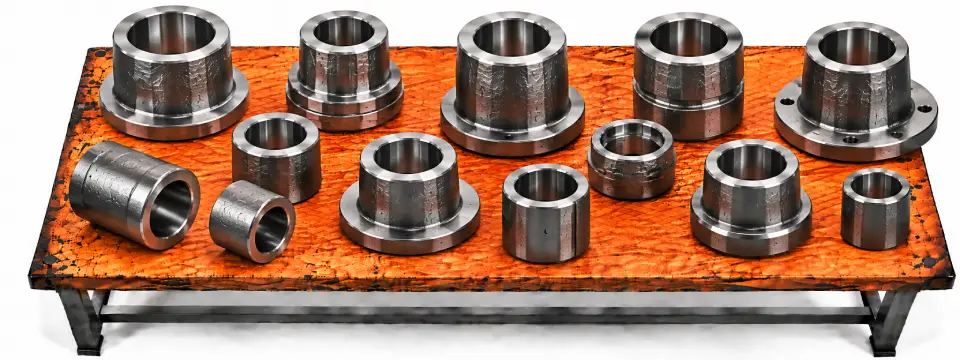
Converting the forged form into a finished precision component.Forged components can undergo CNC Turning, VMC / CNC Machining and other precision machining operations to produce critical bores, threads, surfaces and dimensional features that cannot be achieved during the primary forming stage.
The finished component is then checked against the required dimensional and technical specifications. Final inspection confirms that the component is ready for subsequent production, assembly or delivery.
Process Steps :-
- Precision Machining
- Critical Feature Creation
- Dimensional Checking
- Final Inspection